Distributed Antenna Systems (DAS)
Never suffer from a weak signal again with a Distributed Antenna System (DAS network) for mobile devices.
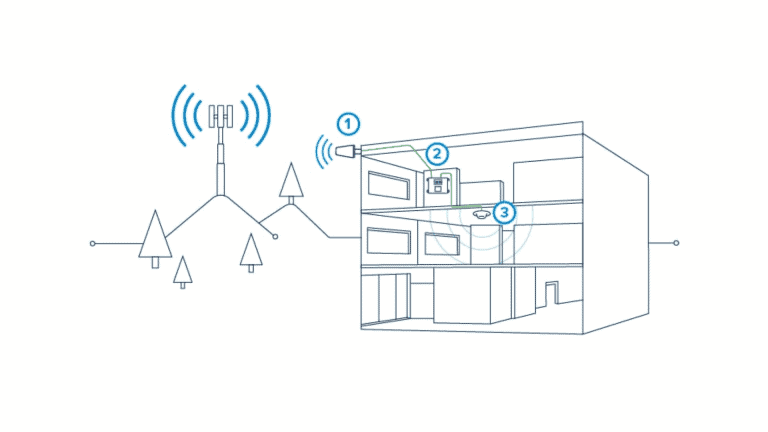
What is a Distributed Antenna System (DAS)?
A Distributed Antenna System (DAS) is a network of antennas deployed to distribute wireless signals in a building or other structure. This system is used to improve signal strength and quality for cell phones, walkie-talkies, WiFi, and other wireless devices. With a DAS, weak signal for mobile devices becomes a thing of the past. This system is considered the perfect solution for achieving optimal indoor coverage in buildings where the signal often leaves much to be desired, such as:
- Offices
- Hospitals
- Hotels
- Stadiums
- Parking garages
- Distribution centers

Improved signal strength and quality
DAS significantly improves signal strength and quality, so you are always connected without hiccups.
Better coverage
DAS extends wireless signal coverage to all corners of your building, in elevators, stairwells and other hard-to-reach areas.
Increased capacity
DAS can increase the capacity of your wireless network, allowing more devices to be used simultaneously without sacrificing performance.
No interference
DAS reduces interference between wireless signals, making the connection more stable and reliable.
Enhanced Mobile Coverage with Distributed Antenna Systems
A Distributed Antenna System (DAS) network provides the perfect solution for achieving optimal indoor coverage in a wide range of buildings and event venues. First of all, signals from various providers, such as GSM, LTE, UMTS, and GPRS, are effectively distributed through one integrated internal network. In addition, a DAS network can contribute significantly to improving coverage for GSM (4G and 5G), C2000, and ASTRID, which is critical to the safety of people in both buildings and event sites.
Temporary DAS Networks for Events
At large events, it is essential to avoid capacity problems. Therefore, temporary Distributed Antenna Systems (DAS networks) are installed by providers to ensure that everyone involved, including security personnel, healthcare providers and visitors, can continue to communicate without interruption during the event.
Distributed Antenna Systems: Different Types
Distributed Antenna Systems (DAS) can be distinguished into three types: Active, Passive, and Hybrid DAS networks. To ensure optimal coverage, the location must first be thoroughly investigated. This choice depends entirely on the specific situation. This is why Flash offers a no-obligation, surveying consultation and site survey so that an appropriate solution can be proposed, specifically tailored to your situation.
Active Distributed Antenna System: Amplification of Signals
In fact, in an active DAS network, signal amplifiers are used to amplify the signal before it is distributed through the antennas. This type of system is particularly effective for providing optimal coverage in large buildings and complexes, even in areas where the signal is naturally weak.
Passive Distributed Antenna System: Distributing Signals
In contrast, no signal amplifiers are used in a passive DAS network. Instead, the signal from mobile operators’ base stations is distributed to the various antennas through a network of splitters and cables. This system is especially suitable for locations where the signal is already strong but needs to be better distributed.
Hybrid DAS Networks: A Combination of Advantages
Finally, a hybrid DAS network combines the advantages of both active and passive systems. Amplifiers are deployed in areas with a weak signal, while passive components are used in areas with a strong signal. This provides a flexible and cost-effective solution that perfectly matches the different coverage requirements within a building or complex.

Want to know more about Distributed Antenna Systems?
Want to learn more about DAS networks and how they can improve your indoor or outdoor coverage?